Adora - Keynote Template: A Practical Evaluation for Presenters
When preparing a presentation, the choice of template can significantly influence both the workflow and the final impression on the audience. The Adora - Keynote Template is one of many options available to those using Apple’s Keynote application, but it positions itself as a comprehensive solution for users who need structure, variety, and visual polish. This article evaluates the template from a practical standpoint, helping you understand what it offers, where it excels, and when you might want to look elsewhere.
What Is the Adora - Keynote Template?
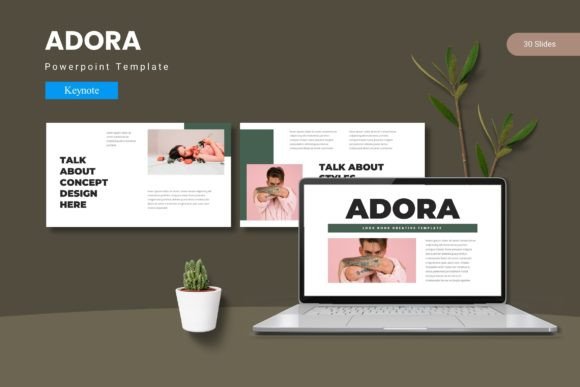
The Adora - Keynote Template is a pre-designed slide deck for Apple’s Keynote software. It includes 150 total slides spread across five premade color variations, with 30 slides allocated to each variation. The template is built around master slides, which means that changes made to the master slide propagate automatically to all slides that use that layout. This approach saves time and ensures visual consistency throughout the presentation.
Beyond the slides themselves, the template includes section break slides, handcrafted infographics, pixel-perfect illustrations, and editable graphics. It also provides picture placeholders that allow for drag-and-drop image insertion, as well as dedicated gallery and portfolio slides. The main file includes five Keynote files, each corresponding to one of the color schemes, plus a folder containing the Keynote files, a “Readme First” document, font information, and details about the photos used.
Why Consider the Adora - Keynote Template?
Presenters often look for templates because they want to reduce the time spent on design without sacrificing quality. The Adora template speaks directly to that need. With 150 slides already laid out, you do not have to start from a blank canvas. The five color variations give you flexibility to match a brand palette, a company identity, or a personal preference without having to rebuild the deck from scratch.
Another reason for interest is the inclusion of infographics and illustrations. Many speakers find that visual data representation improves audience understanding and retention. Having handcrafted infographics that are resizable and editable means you can adapt them to your own data without needing advanced design skills.
The presence of picture placeholders is also a practical advantage. Instead of manually positioning and resizing images, you can drag and drop photos into pre-defined frames. This speeds up the workflow and reduces the chance of misaligned visuals.
Benefits and Practical Advantages
The most immediate benefit of the Adora - Keynote Template is the sheer volume of content. With 30 slides per color variation and five variations total, you have enough material to assemble a lengthy presentation without repeating layouts. This is particularly useful for conference talks, training sessions, or portfolio reviews where you need to cover multiple topics while maintaining a cohesive look.
The use of master slides is another advantage that translates into real time savings. If you decide to change the font, background color, or positioning of a recurring element, you can do so on the master slide and all linked slides will update automatically. This reduces the risk of inconsistencies that can occur when editing slides individually.
The graphics and illustrations in the template are described as pixel-perfect and fully scalable. This is important because presentations are often displayed on large screens, and low-resolution or pixelated graphics can undermine credibility. With vector-based or high-resolution elements, the slides remain sharp regardless of the display size.
Customizability is also a key benefit. The template is designed so that colors, fonts, and layouts can be adjusted to fit your needs. You are not locked into a rigid design; rather, you are given a starting point that you can refine. For users who are comfortable with Keynote’s editing tools, this offers a good balance between structure and flexibility.
Tradeoffs and Limitations
No template is perfect for every situation, and the Adora - Keynote Template has tradeoffs worth considering. One limitation is that it is built exclusively for Apple Keynote. If you or your team use Microsoft PowerPoint, Google Slides, or another presentation tool, the template will not work natively. While you could export slides to other formats, some of the master-slide functionality and editable features may be lost in the conversion. This makes the template less ideal for collaborative environments where multiple tools are used.
Another consideration is the learning curve associated with master slides. While master slides are powerful, they require some understanding of how they work. New Keynote users may find themselves unintentionally overriding master layouts or making changes that do not propagate as expected. The “Readme First” document included in the package can help, but it does assume a baseline level of familiarity with Keynote.
The five color schemes, while helpful, may not cover every brand identity. If your organization uses a specific color that does not appear in any of the five variations, you will need to invest time in manually updating the color palette across the deck. This is doable but adds to the setup time.
Additionally, a 150-slide template is substantial, but it is worth noting that not all slides may be relevant to your specific presentation. You will likely need to remove or adapt slides that do not fit your content. This is not a major drawback, but it is something to factor into your planning time.
When Is the Adora - Keynote Template a Strong Fit?
The Adora template is particularly well suited for users who need a polished, professional-looking presentation on a tight deadline. If you are a keynote speaker, a business consultant, a creative professional showing a portfolio, or an educator preparing a multi-session workshop, the breadth of slides and consistency of design can help you get to a finished product faster.
It is also a good choice for individuals or small teams who work exclusively in Keynote and want to avoid the recurring cost of subscription-based design tools. Once purchased, the template is a one-time asset that can be reused and adapted for multiple presentations.
For those who want to include data visualizations but lack the skills or time to create them from scratch, the handcrafted infographics are a practical feature. You can edit the graphics to reflect your own numbers without needing to learn a separate charting tool.
The gallery and portfolio slides are another strong fit for photographers, designers, architects, or anyone who needs to showcase visual work. The picture placeholders make it easy to swap in images without breaking the layout.
When Might Alternatives Be Worth Considering?
If you work in a team that uses a mix of presentation software—for instance, Keynote on some computers and PowerPoint on others—the Adora template may create compatibility headaches. In such cases, a cross-platform template or a tool like Google Slides might be more practical, even if it offers fewer design options.
For users who need highly specialized layouts, such as complex data dashboards, interactive elements, or multimedia-heavy slides, a general-purpose template like Adora may not provide the depth you need. You might be better served by a custom-designed solution or by building slides from scratch to meet those specific requirements.
Budget-conscious buyers should also compare the cost of the Adora template against free alternatives. Keynote itself includes a number of built-in templates, and there are free resources available online. While these may not offer the same volume or polish, they can be sufficient for simpler presentations. The question is whether the time saved by using Adora justifies its price relative to free options.
Additionally, if you prefer a minimalist or highly unique visual style, the Adora template’s aesthetic may not align with your preferences. The design language is polished and professional, but it is not avant-garde. You may find that the template feels too structured if you are looking for something more experimental or artistic.
Practical Decision-Making Insights
When evaluating the Adora - Keynote Template, focus on three practical factors: your software environment, your need for customization, and the type of content you present most often.
If you are a dedicated Keynote user who frequently creates presentations that include images, data, and multiple sections, the Adora template can serve as a reliable foundation. The 150 slides and five color variations provide enough raw material to cover a wide range of topics without starting over each time.
If you work in a team or need to share slides across different platforms, test the template’s export quality before committing. Export to PowerPoint or PDF and verify that the layout, fonts, and graphics remain intact. This step can save you from discovering compatibility issues at an inconvenient moment.
Consider also how much time you are willing to invest in learning the template’s structure. If you are comfortable with Keynote’s master slides and prefer to work within a systematic framework, Adora will likely fit your workflow. If you prefer a more freeform approach, you may find the template constraining.
Finally, look at the specific slides included in the template. Count how many of them are directly relevant to your typical presentation. If you regularly deliver 20-slide talks, a 150-slide template means you will be discarding most of the content. In that scenario, a smaller, more focused template might offer better value unless you anticipate repurposing the extra slides for future presentations.
Aligning the Template with Your Goals
To decide whether the Adora - Keynote Template aligns with your needs, start by listing the core requirements for your next presentation. If consistency, speed, and visual polish rank high, the template addresses those priorities directly. If cross-platform compatibility, unique design, or minimalism are more important, you may want to explore other options.
The template is best suited for users who want a comprehensive starting point that they can tailor over time. It is less suited for those who need a one-size-fits-all solution or who are unwilling to invest a small amount of time in learning how to customize it effectively.
Ultimately, the Adora - Keynote Template is a tool that rewards investment. The more you understand its structure and features, the more efficiently you can use it to produce presentations that feel cohesive and intentional. For Keynote users who regularly present and value visual consistency, it offers a practical path from blank slide to finished deck.