Unlocking Strategic Clarity: The Four Jigsaw Puzzle Elements Process Chart in Modern Business Storytelling
In an era where data is abundant but attention spans are scarce, the ability to communicate complex ideas with clarity and visual appeal has become a defining skill for professionals across every sector. The Four Jigsaw Puzzle Elements Process Chart represents a convergence of design thinking and strategic communication, offering a structured yet flexible framework for presenting interconnected ideas. This visual tool, often delivered as a polished slide template, transforms abstract concepts into tangible, memorable narratives. By leveraging the universal metaphor of a jigsaw puzzle—where each piece is essential to the whole—this chart enables presenters, strategists, and creators to articulate multi-faceted processes with elegance and precision. Whether you are mapping a quality management workflow, outlining a strategic plan, or illustrating a customer journey, this template serves as a visual anchor that resonates with audiences who value both substance and aesthetics.
Understanding the Four Jigsaw Puzzle Elements Process Chart
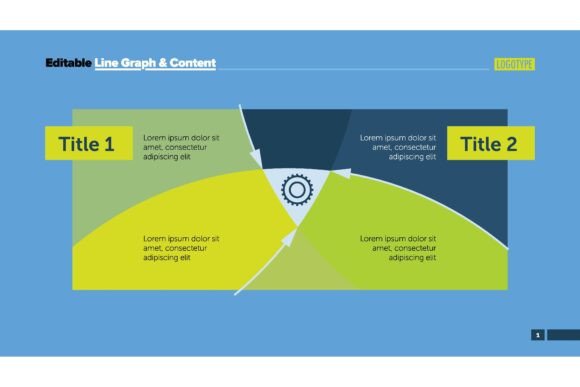
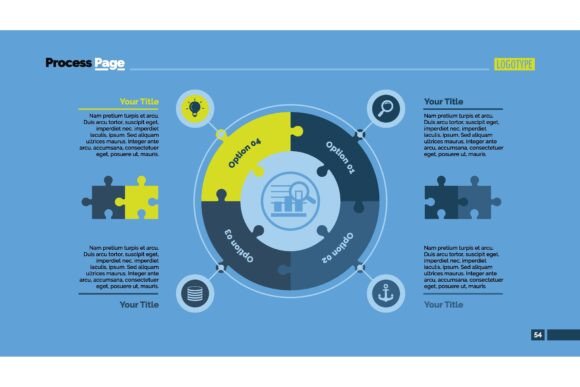
At its core, the Four Jigsaw Puzzle Elements Process Chart is a circular, four-segment diagram that visually represents a process or framework built on four interconnected components. Unlike linear flowcharts that imply a strict sequential order, the circular puzzle design suggests integration, interdependence, and cyclical continuity. Each piece of the puzzle is uniquely shaped but fits seamlessly with the others, reinforcing the idea that no single element operates in isolation. This design choice is particularly powerful in contexts where collaboration, balance, and holistic thinking are paramount.
The template typically includes customizable text areas, color-coded segments, and connecting visual cues that guide the viewer's eye around the diagram. While the basic structure remains consistent, the content within each piece can be tailored to reflect the specific needs of a presentation—whether that involves strategic pillars, operational phases, customer touchpoints, or innovation drivers. The circular layout also lends itself well to infographics, annual reports, pitch decks, and educational materials, where the goal is to inform and persuade without overwhelming the audience.
What distinguishes this chart from a generic circular diagram is its grounding in the puzzle metaphor. The irregular edges of each puzzle piece create a sense of tension and resolution; the viewer instinctively understands that the pieces must come together to form a complete picture. This psychological engagement makes the chart not just a visual aid, but a storytelling device that invites the audience to think about how discrete elements combine to create value.
The Design Philosophy Behind the Template
The Four Jigsaw Puzzle Elements Process Chart is not merely a decorative graphic; it is a product of intentional design thinking. The circular arrangement encourages a systems-thinking approach, where the viewer considers the relationships between elements rather than treating them as isolated data points. The puzzle motif reinforces the idea that each component is necessary—and that missing or weak pieces compromise the integrity of the whole. This is particularly relevant in fields like quality management, where process completeness is non-negotiable, or in strategic planning, where alignment across departments is critical.
Modern audiences are increasingly visually literate, and they expect presentations to be both informative and aesthetically refined. The template addresses this expectation by offering a clean, contemporary look that feels neither overly simplistic nor cluttered. Its adaptability allows presenters to maintain brand consistency while introducing a visual metaphor that enhances comprehension. For entrepreneurs pitching to investors, for instance, the puzzle chart can quickly communicate how four core business functions—product development, marketing, sales, and customer success—fit together to drive growth. The intuitive nature of the puzzle metaphor reduces cognitive load, allowing the audience to focus on the strategic message rather than decoding the visual.
Why the Four Jigsaw Puzzle Elements Process Chart Matters Today
The business and creative landscapes are characterized by increasing complexity and rapid change. Organizations are expected to be agile, but agility without coherence leads to fragmentation. The Four Jigsaw Puzzle Elements Process Chart addresses this tension by providing a visual language for integration. In a world where cross-functional collaboration is the norm, the ability to show how different teams, processes, or strategies interlock is invaluable. This chart serves as a common reference point, aligning stakeholders around a shared mental model.
Moreover, the rise of remote and hybrid work has accelerated the need for clear, self-contained visual communication. When team members cannot gather around a whiteboard, a well-designed slide template becomes the whiteboard. The puzzle chart, with its intuitive structure, reduces the need for lengthy explanations. A viewer can grasp the essence of a framework in seconds, and the circular format is particularly effective for virtual presentations where attention may be divided. The template's versatility also extends to asynchronous communication—it works equally well in a slide deck, a PDF report, or an infographic shared via email.
Another factor driving attention to this tool is the growing emphasis on data storytelling. Raw data, no matter how accurate, rarely inspires action. The Four Jigsaw Puzzle Elements Process Chart transforms data into a narrative. By associating each puzzle piece with a key insight or metric, presenters can guide their audience through a logical progression: identifying the current state, diagnosing gaps, and envisioning an integrated solution. This approach aligns with the broader trend of moving from information transmission to insight generation.
Shifting Expectations in Professional Communication
The expectations of modern audiences have evolved. Stale, text-heavy slides are no longer acceptable; viewers demand visuals that are both informative and engaging. The Four Jigsaw Puzzle Elements Process Chart meets this demand by offering a structure that is inherently interesting. The puzzle metaphor sparks curiosity—viewers want to see how the pieces fit together. This engagement is not superficial; it directly supports comprehension and retention. Studies in visual learning have consistently shown that diagrams and metaphors improve recall, and the puzzle chart leverages this principle effectively.
Furthermore, professionals are increasingly expected to be multi-literate—comfortable with data, design, and narrative. The puzzle chart serves as a bridge between these domains. It is a design object, a data container, and a storytelling framework rolled into one. For marketers, it can illustrate the customer journey from awareness to advocacy. For product managers, it can map the stages of a product lifecycle. For HR leaders, it can depict the pillars of employee engagement. The template's flexibility means it can be repurposed across contexts, making it a practical investment for any professional who regularly creates presentations.
Practical Applications Across Disciplines
The true value of the Four Jigsaw Puzzle Elements Process Chart lies in its applicability to real-world challenges. Consider a strategic planning session where a leadership team needs to align around four priority initiatives. Instead of listing them in bullet points, the puzzle chart visually demonstrates how the initiatives support one another. The circular layout suggests a continuous cycle of planning, execution, review, and refinement, reinforcing the iterative nature of strategy.
In a marketing context, the chart can illustrate the four stages of a content funnel: awareness, consideration, conversion, and loyalty. Each puzzle piece can include key metrics or tactics, and the seamless fit between pieces emphasizes the importance of a unified approach. A marketer presenting this chart to stakeholders can quickly communicate how investments in one stage affect the others, making a compelling case for integrated strategy rather than siloed campaigns.
For quality management professionals, the Four Jigsaw Puzzle Elements Process Chart aligns naturally with frameworks like PDCA (Plan-Do-Check-Act) or Six Sigma's DMAIC (Define-Measure-Analyze-Improve-Control). The puzzle metaphor reinforces the idea that quality is a system property, not a standalone outcome. Each piece represents a phase or principle, and the chart as a whole communicates that excellence requires all components to work together.
Entrepreneurs and freelancers can use the template to simplify their business model when pitching to investors or clients. Four key elements—such as product, market, team, and financials—can be presented in an integrated way that highlights coherence and viability. The visual impact of the puzzle chart often leaves a stronger impression than a traditional bullet-point list, helping the presenter stand out in a competitive environment.
Adapting to Industry and Consumer Trends
The broader shift toward visual communication and design thinking has positioned the Four Jigsaw Puzzle Elements Process Chart as a relevant tool for contemporary professionals. As organizations flatten hierarchies and emphasize cross-functional collaboration, the need for shared visual language grows. The puzzle chart transcends departmental jargon, offering a universal format that can be understood by engineers, creatives, and executives alike.
Consumer trends also play a role. Audiences are accustomed to polished, app-like interfaces and expect similar quality in professional presentations. The circular puzzle design feels modern and approachable, breaking away from rigid grid-based layouts that can feel corporate and distant. This aesthetic alignment with user experience design makes the chart particularly effective for customer-facing presentations, where first impressions matter.
The template also responds to the growing demand for sustainability and completeness in business thinking. The puzzle metaphor inherently suggests that leaving out a piece is unacceptable—every element is necessary. This aligns with contemporary movements toward holistic approaches in areas like ESG (Environmental, Social, and Governance) reporting, circular economy models, and integrated reporting. The chart can powerfully communicate that a company's success depends on balancing multiple, interconnected dimensions.
Practical Considerations for Using the Template
To maximize the impact of the Four Jigsaw Puzzle Elements Process Chart, presenters should focus on content clarity and visual consistency. Each puzzle piece should contain a concise, actionable label and, where appropriate, a supporting metric or phrase. Avoid overcrowding the chart; the power of the puzzle metaphor lies in its simplicity. Use color strategically to differentiate pieces while ensuring the overall composition feels harmonious. The circular flow should be intuitive, guiding the viewer clockwise or counter-clockwise as the narrative demands.
It is also worth considering the order of the pieces. While the circular layout does not impose a strict sequence, presenting the pieces in a logical progression—moving from left to right or top to bottom within the circle—can enhance comprehension. If the chart is part of a larger presentation, introduce each piece individually before revealing the complete puzzle. This builds anticipation and allows the audience to absorb each element before seeing how they fit together.
Finally, remember that the Four Jigsaw Puzzle Elements Process Chart is a starting point, not a crutch. The best presentations combine strong visuals with compelling storytelling. Use the chart as an anchor, but support it with data, examples, and narrative context. When used thoughtfully, it becomes more than a slide—it becomes a framework for shared understanding.
Conclusion: A Tool for Integrated Thinking
The Four Jigsaw Puzzle Elements Process Chart is more than a design trend; it is a reflection of how modern professionals think and communicate. In a world where complexity is the baseline, tools that simplify without distorting are invaluable. This chart does exactly that: it reduces complexity into four essential pieces while preserving the richness of their interconnections. Whether you are a strategist mapping a transformation, a marketer planning a campaign, or an entrepreneur pitching your vision, this template offers a visual vocabulary that speaks to both logic and creativity.
As the boundaries between disciplines continue to blur, the ability to present ideas with clarity, coherence, and visual appeal will only grow in importance. The Four Jigsaw Puzzle Elements Process Chart equips you to meet that challenge—not by offering more information, but by offering better understanding. Embrace the puzzle, and let your ideas fit together seamlessly.