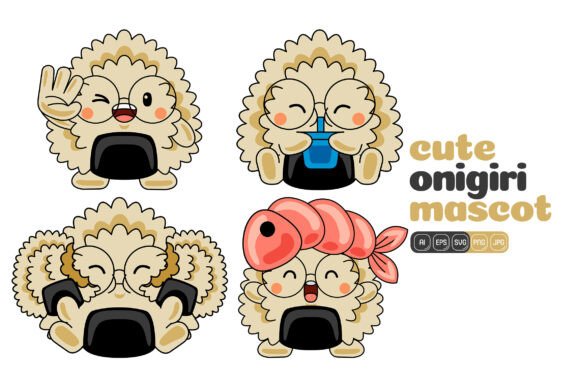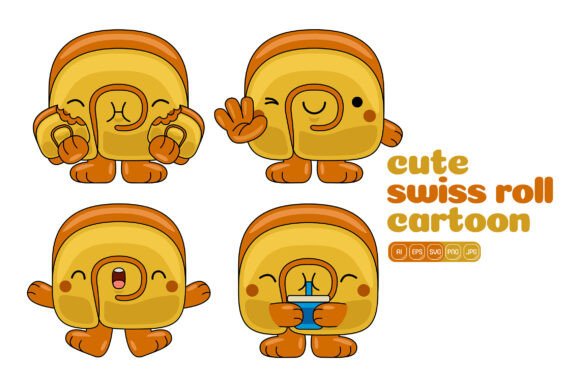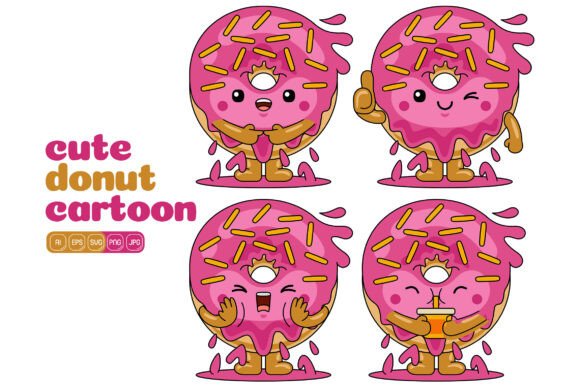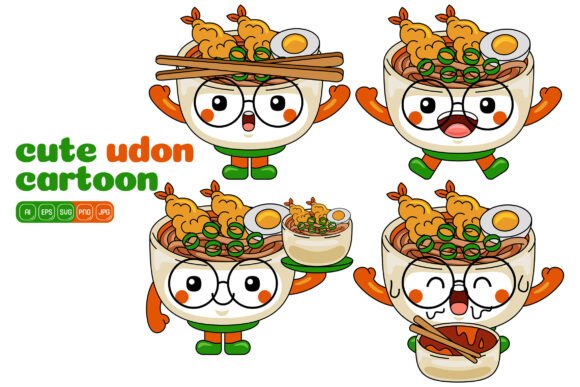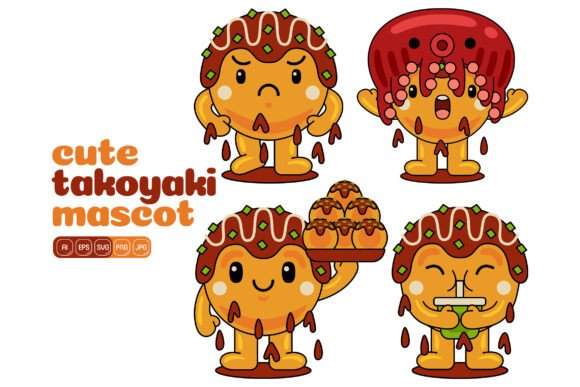
Cute Takoyaki Mascot Vector Pack 04: A Practical Asset for Consistent Visual Storytelling
Creating cohesive visuals across multiple projects often means starting from scratch or relying on the same limited set of icons. If you produce content regularly—whether for social media, client deliverables, or internal communications—you know the friction of hunting for the right graphic element. Cute Takoyaki Mascot Vector Pack 04 offers a different approach: a focused library of flat-design illustrations built for adaptation, resizing, and re-coloring. Instead of a rigid set of finished images, you get a collection of components designed to fit into your existing workflow, whether you are planning a campaign, developing a landing page, or preparing educational materials.
What the Pack Contains and Why It Matters for Your Workflow
This vector pack delivers 100 individual illustrations in a consistent flat design style. Each asset is provided in a variety of formats: AI, EPS, SVG, PDF, JPEG, and PNG with a transparent background. The file dimensions are set at 3000 x 3000 pixels, which gives you enough resolution for both digital screens and print materials. The real workflow advantage comes from how these files are structured. Every shape within each illustration remains editable, so you can change colors, resize individual elements, or combine pieces from different illustrations to create custom compositions.
For anyone who works with Adobe Illustrator or similar vector software, this means you can drop an asset into a project and adjust it without breaking the design. Need a mascot that matches your brand palette? Select the shape, change the fill, and you are done. Want to use the same character across a banner and a social media post without losing quality? The vector format handles scaling naturally. This level of control reduces the time spent recreating graphics from scratch and keeps your visual output consistent.
Before the Project: Planning Your Visual Library
One of the strongest uses for Cute Takoyaki Mascot Vector Pack 04 comes during the preparation phase of any content or design project. Instead of waiting until you need a graphic, you can pre-build a library of variations that align with common themes you cover. For example, if you run a food blog or a restaurant marketing account, you can extract several mascot poses, adjust their colors to match seasonal campaigns, and store them in a project folder. When a new post or ad needs to go live, you already have a set of on-brand illustrations ready.
Preparation also extends to client work. If you are a freelancer or small agency owner, having a versatile asset pack means you can mock up concepts faster. Early in the pitching process, you can show clients how a mascot might look across different formats—website header, Instagram story, flyer, email header—without investing hours per variant. The editable nature of the vectors lets you test color themes, layout positions, and size variations in minutes rather than hours.
Integration With Design Tools and File Management
Compatibility is a practical concern when adding any asset pack to your toolkit. This pack includes AI and EPS files for Adobe Illustrator users, which is the standard environment for vector editing. SVG files work well for web developers who need scalable graphics directly in code or for tools like Figma and Sketch. PDF files give you a portable option that preserves vector quality across different operating systems. The high-resolution JPEG and transparent-background PNG files cover situations where you need a quick export without opening a vector editor.
In a typical workflow, you might start by opening the AI file in Illustrator, selecting a mascot variation, and adjusting the colors using the global swatches. If you prefer a different tool, importing the SVG into your preferred design software maintains the editable paths. The 3000 x 3000 pixel base size means you can scale down for thumbnails or scale up for posters without worrying about pixelation. Keeping the master files organized in a dedicated folder, with subfolders for color variants and combined illustrations, will save you time when you revisit the pack months later.
During Active Work: Real-World Use Cases
Where this vector pack truly earns its place in your workflow is during active content creation. Let me walk through a few practical scenarios.
Social Media Content
If you manage multiple social channels, you need visuals that work at different aspect ratios. A single mascot from the pack can be placed in a square Instagram post, a landscape Facebook cover, or a vertical story. Because the vector art is resolution-independent, you can export each variant at the exact dimensions required. Add your headline, adjust the mascot's color to match the day's theme, and schedule the post. Over a month, you can rotate through several mascot expressions from the pack while keeping the overall look cohesive.
Blog Articles and Landing Pages
For long-form content, mascot illustrations serve as visual anchors that break up text and add personality. Place a mascot near a subheading to reinforce the section's topic, or use it as a call-to-action element at the end of a post. Because you can change colors quickly, you can match the mascot to your brand's primary and secondary colors without extra image editing software. This is particularly useful when you are publishing multiple articles in a series and want each one to feel distinct but part of a unified system.
Print Materials and Flyers
Print design has different resolution demands than digital. The 3000 x 3000 pixel source files give you clean output at standard print sizes. For a trifold brochure or a half-page flyer, you can place a mascot, resize it, and adjust contrast or color saturation directly in the vector file. The transparent PNG format is handy if your print workflow uses layout software like InDesign and you need a ready-to-place image with no background cleanup.
Infographics and Educational Visuals
Infographics thrive on consistent iconography. With 100 illustrations at your disposal, you can select multiple mascots that represent different steps or concepts within a single infographic. Adjust the color of each mascot to indicate progression or categories. The flat design style keeps the visual load low, making the information easier to scan. If you teach or create tutorials, you can reuse these same assets across slides, handouts, and online course modules, building a familiar visual language for your audience.
Combining Elements for Custom Illustrations
One of the more powerful workflow features of Cute Takoyaki Mascot Vector Pack 04 is the ability to combine elements from different illustrations. Let's say you have a mascot holding one object in one file and another mascot with a different pose in a second file. You can copy the object, scale it, and attach it to the other mascot. Or you can build a scene by placing several mascots together, adjusting their sizes and positions to create a composition that feels original.
This approach is faster than drawing new elements from scratch and helps maintain visual consistency because all the assets share the same design language. For a promotional banner, you might combine three mascots with different facial expressions, add a background shape, and overlay text. For an email header, you might take one mascot, enlarge it, and add a speech bubble from another illustration. The workflow is essentially modular: you have a set of building blocks that you can reconfigure as the project demands.
Quality Control and Consistency Across Deliverables
When you produce materials over weeks or months, visual drift can happen. One post uses a slightly different shade of blue; another has a mascot that looks smaller than the previous one. Because this vector pack gives you direct control over color and scale, you can establish a simple style guide. Define the exact hex values for your brand colors and apply them to every mascot variant you use. Keep a master Adobe Illustrator file with your most-used mascots already colored and sized, and reference it each time you start a new layout. This reduces guesswork and ensures that your audience sees a consistent brand presence across all touchpoints.
For quality checking, open your final exports at actual size before publishing or printing. The vector source files should look crisp at any zoom level, but it is always good practice to verify that any effects or outlines applied during editing render correctly in the output format. If you are exporting to PNG, confirm that the transparency is intact, especially if the mascot overlaps with text or other graphics.
Long-Term Use and Updates
A well-organized asset pack stays useful for years. Store your master vector files with clear file names and version dates. If you create custom color variants for specific campaigns, save them as separate AI or SVG files with the campaign name in the filename. Over time, you will build a library that goes beyond the original 100 illustrations. Each time you combine elements or adjust a mascot for a new context, you effectively create a new asset that you can reuse later.
Because the pack includes both vector and raster formats, you are not locked into one software ecosystem. If you switch from Illustrator to another vector tool, the SVG files will transfer your work. If you need to hand off assets to a collaborator who does not use vector software, the high-resolution JPEG and PNG files cover that scenario immediately. This flexibility matters when your workflow involves multiple people or platforms.
Practical Tips for Getting Started
If you are ready to integrate this vector pack into your routine, here is a simple process to begin:
- Download and unzip the files into a dedicated folder on your local drive or cloud storage.
- Open the AI or EPS file in Adobe Illustrator and browse through the 100 illustrations. Identify the ones that align with your most frequent content themes.
- Create a new document with your standard output size. Copy a mascot into the document and experiment with changing colors using the direct selection tool. Note how the shapes are grouped and which elements are independent.
- Export a few variations at typical sizes you use—1080x1080 pixels for Instagram, 1200x628 pixels for blog headers, 300 DPI for print. Check the output quality.
- Build a starter library of five to ten mascots colored to your brand palette. Save them in a "Master Assets" folder so you can access them quickly.
From there, each project becomes a matter of selecting the right mascot, adjusting it to the specific context, and exporting. Over time, you will develop your own shortcuts and preferences, but the core process remains the same: start with a high-quality vector source, customize it to fit the moment, and output it in the format your project requires.
Final Observations on Process and Value
Cute Takoyaki Mascot Vector Pack 04 fits best in a workflow that values consistency, speed, and flexibility. It is not a set of finished marketing materials—it is a raw material that you shape to your own needs. The 100 illustrations give you breadth, and the editable vector structure gives you depth. Whether you are preparing assets for a client project, building a social media calendar, or designing a series of educational graphics, this pack behaves like a reliable component library. You invest the time upfront to customize and organize, and that investment pays back each time you start a new layout and find exactly the mascot you need, already styled, already sized, ready to drop into place.